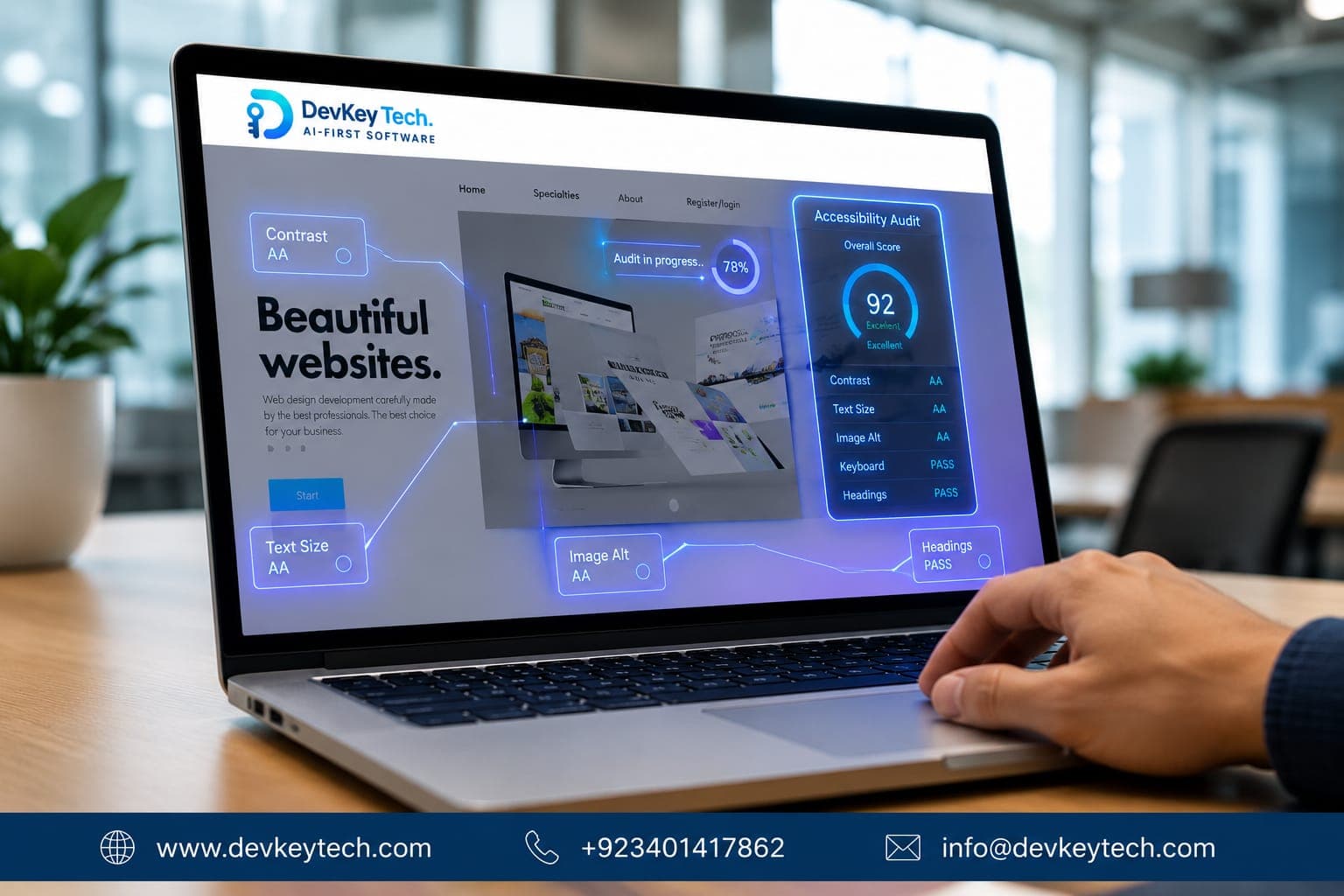
In the digital landscape, accessibility is often viewed through the lens of compliance – a box to tick, a regulation to meet. While legal adherence is undoubtedly important, framing accessibility purely as a statutory obligation misses a crucial point: it’s a powerful driver for audience expansion and enhanced user experience. With the advent of artificial intelligence (AI), web accessibility is moving beyond static guidelines, offering dynamic and scalable solutions that genuinely open your digital doors to a broader, more diverse audience.
Beyond Compliance: Why AI Accessibility Matters
For years, achieving web accessibility, particularly for complex websites and applications, has been a significant undertaking, often requiring extensive manual review and specialized development. This labor-intensive process sometimes led businesses to treat accessibility as a secondary concern or a reactive fix, rather than an integral part of their digital strategy.
AI is changing this paradigm. By automating many accessibility tasks, it reduces the barrier to entry and allows for continuous improvement. It shifts the conversation from merely avoiding legal pitfalls to actively embracing inclusive design principles that benefit everyone. When a website is accessible, it's not just compliant; it's better designed, more intuitive, and ultimately, more effective for all users.
Core AI-Driven Accessibility Solutions
Modern AI tools are revolutionizing how we approach common accessibility challenges. Here are some key areas where AI is making a tangible difference:
Automated Alt Text Generation
Images are central to web content, but for users who are blind or visually impaired, they present a significant barrier without descriptive alt text. Manually writing alt text for every image on a large site is often impractical.
AI image recognition models can analyze visual content within an image and automatically generate a textual description. While not always perfect, these AI-generated descriptions provide a valuable starting point, ensuring that even images overlooked by human editors still convey some information to screen reader users.
This capability ensures that more images contribute positively to the user experience, rather than being navigational dead ends or points of confusion.
Dynamic Contrast Adjustment
Maintaining sufficient color contrast between text and background is critical for users with low vision, color blindness, or even those viewing content in varying light conditions. Meeting WCAG contrast ratios across an entire site can be challenging, especially with dynamic content or user-generated themes.
AI algorithms can analyze color palettes in real-time and dynamically adjust colors to meet or exceed recommended contrast standards. This can involve subtly shifting hues, increasing saturation, or even recommending alternative color schemes based on user preferences or detected environmental light, significantly improving readability for a wider range of users.
AI-Powered Captioning and Transcription
Video and audio content are often inaccessible to individuals who are deaf or hard of hearing without accurate captions and transcripts. Manually captioning extensive multimedia libraries is a time-consuming and costly process.
Advanced AI speech-to-text engines can automatically generate captions and transcripts for audio and video content with remarkable accuracy. While human review is still advisable for critical content, AI provides a highly efficient first pass, making vast amounts of multimedia instantly more accessible. This also benefits users in noisy environments or those who prefer to consume content without sound.
Predictive UI/UX Adjustments
Beyond explicit accessibility features, AI can subtly enhance user interfaces and experiences based on user behavior and preferences. For instance, an AI might learn that a user frequently adjusts text size or prefers a simplified layout, and proactively suggest or implement these adjustments on subsequent visits. While still an emerging field, predictive AI holds the potential for highly personalized and accessible user interfaces that adapt intuitively to individual needs, addressing a broader spectrum of cognitive and physical accessibility requirements.
Expanding Your Real Audience Reach
Integrating AI-driven accessibility isn't just about avoiding penalties; it's about unlocking significant business advantages and expanding your market footprint:
Improved SEO and Discoverability
Search engines favor accessible content. Well-structured headings, accurate alt text, and comprehensive transcripts provide search engine crawlers with more context about your content. This leads to better indexing, improved search rankings, and ultimately, greater organic discoverability. When your content is machine-readable and semantically rich, it performs better.
Enhanced User Experience for Everyone
Consider features like dark mode or customizable font sizes – these are accessibility-driven innovations that have become widely popular among all users. AI-powered tools that automatically optimize contrast or provide clear captions benefit not just those with specific disabilities, but anyone interacting with your content in sub-optimal conditions (e.g., bright sunlight, noisy environments, or simply preferring a different visual style). A universally designed website is a joy to use.
Tapping into Underserved Markets
People with disabilities represent a substantial global demographic with significant purchasing power. By making your website truly accessible, you are actively inviting this often-underserved market to engage with your products, services, and content. This isn't just ethical; it's a smart business decision that directly translates into increased engagement and potential revenue.
Brand Reputation and Social Responsibility
Companies that prioritize accessibility cultivate a strong brand image as inclusive, empathetic, and socially responsible. In today's conscious consumer landscape, such values resonate deeply with customers, leading to greater brand loyalty and positive public perception. Demonstrating a genuine commitment to accessibility shows that your organization values all individuals.
The Role of Human Oversight
While AI offers incredible advancements, it's crucial to understand that it is a powerful tool, not a complete replacement for human judgment and empathy. AI models, particularly in areas like alt text generation, can sometimes misinterpret context, generate generic descriptions, or even make factual errors. Complex, nuanced images still benefit greatly from human-crafted descriptions that capture the full intent and context.
Human accessibility experts and user testing with individuals with disabilities remain indispensable. AI streamlines the process and covers a broader base, but human review ensures accuracy, context, and a genuinely empathetic user experience. The most effective strategy combines the scalability of AI with the precision and understanding of human experts.
Implementing AI Accessibility: A Practical Approach
For organizations looking to leverage AI for accessibility, a strategic approach is key:
- Conduct an Accessibility Audit: Start by understanding your current accessibility posture. Identify critical areas for improvement.
- Integrate AI Tools Incrementally: Begin with areas where AI can provide immediate, scalable value, such as automated alt text for new images or dynamic contrast checks.
- Prioritize Human Review: Establish workflows for human oversight, especially for high-impact content or complex visual elements.
- Gather User Feedback: Continuously test your AI-enhanced accessibility features with real users, including individuals with disabilities, to refine and improve their effectiveness.
- Partner with Experts: For comprehensive accessibility strategies and complex implementations, consider collaborating with software development companies experienced in inclusive design and AI integration. Find out how DevKey Technologies can help with your custom software development needs.
By embracing AI not as a silver bullet, but as a force multiplier for human effort, organizations can move beyond mere compliance to create truly inclusive, user-friendly digital experiences that resonate with a wider audience. This is not just good practice; it's smart business. If you're looking to enhance your digital presence, exploring AI-driven accessibility is a strategic step towards a more inclusive future. Reach out to us to discuss your project.