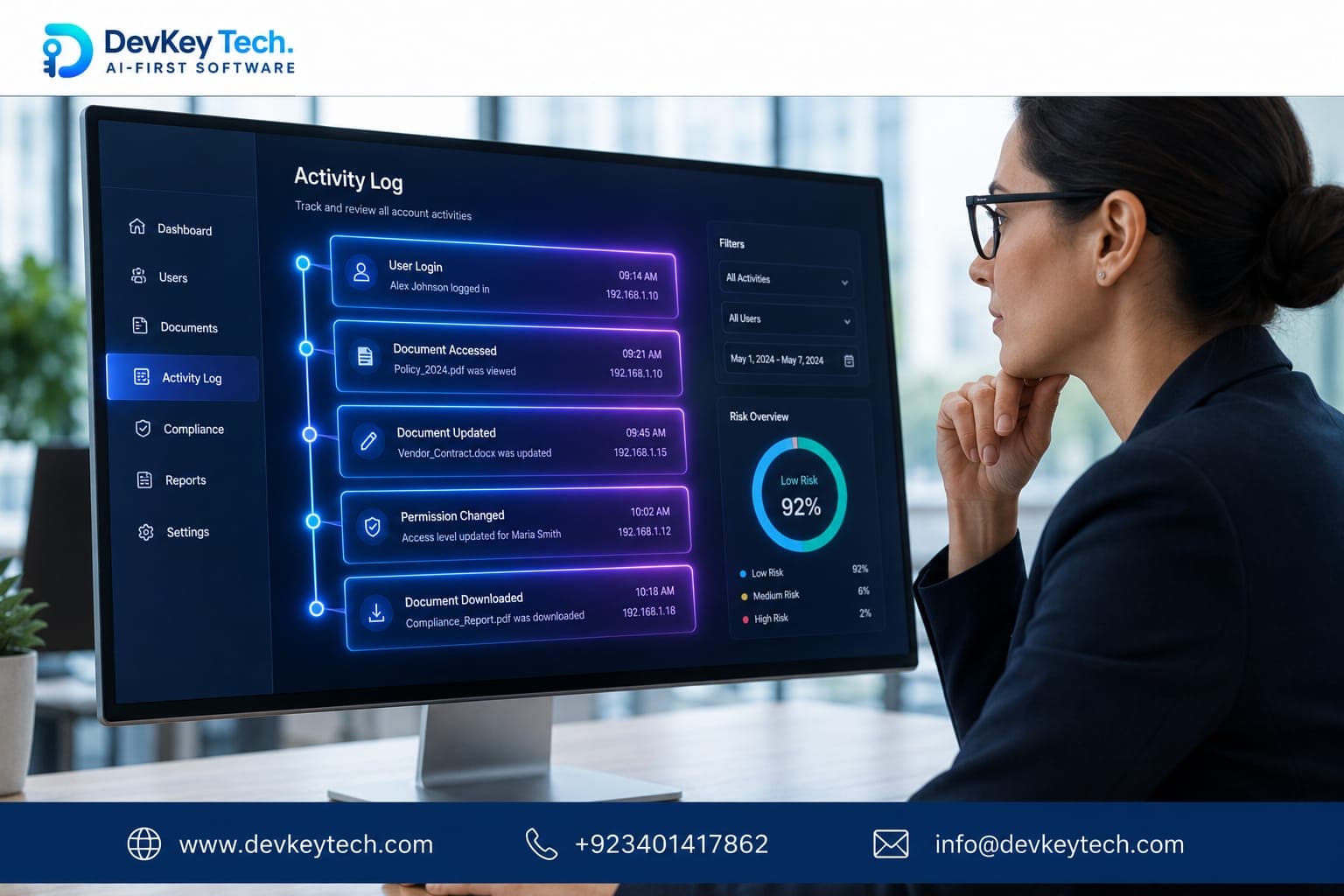
In the world of custom software, few features are as critical and often misunderstood as the audit trail. For businesses operating in regulated industries, the question isn't whether your system should remember who changed what, but rather, how comprehensively, securely, and immutably it does so. A system that "just doesn't remember" is a liability, not a solution, and poses significant risks from a compliance, security, and operational standpoint.
What Exactly Is an Audit Trail?
At its core, an audit trail is a chronological record of events, providing irrefutable evidence of operations, actions, and transactions within a system. Think of it as a detailed journal maintained by your software, documenting every significant interaction. It answers fundamental questions about data and system changes:
- What: What action was performed (e.g., record created, data modified, file accessed, user logged in)?
- Who: Which user or system process initiated the action?
- When: At what exact date and time did the action occur?
- Where: From what location or IP address was the action initiated?
- Why: What was the context or reason (if applicable, though often inferred from the action itself)?
- Old/New Values: For modifications, what was the data before and after the change?
The goal is to establish non-repudiation – the assurance that a user cannot deny having performed an action because the evidence is logged securely and verifiably.
Why Audit Trails Are Non-Negotiable for Regulated Industries
For industries subject to strict regulations, audit trails transition from a useful feature to an absolute necessity. The stakes are high: non-compliance can lead to hefty fines, legal action, reputational damage, and even loss of operational licenses.
Compliance and Regulatory Mandates
Many regulations explicitly require detailed audit trails to demonstrate control over data and processes. Examples include:
- Healthcare (HIPAA, HITECH): Protecting Electronic Protected Health Information (ePHI) requires logging access and modifications.
- Financial Services (SOX, PCI DSS, MiFID II): Ensuring financial data integrity, preventing fraud, and tracking transactions.
- Pharmaceutical & Life Sciences (FDA 21 CFR Part 11): Mandating electronic records and signatures be trustworthy and equivalent to paper records.
- Data Privacy (GDPR, CCPA): Demonstrating how personal data is accessed, processed, and potentially deleted.
Regulators demand not just the presence of audit logs, but their integrity, immutability, and retrievability. They need to be able to reconstruct events accurately to verify compliance.
Enhanced Accountability and Governance
An effective audit trail fosters a culture of accountability. When every significant action is logged and attributable, users are more careful and intentional. It provides a clear mechanism for:
- Dispute Resolution: Settling disagreements about who did what, when, or why.
- Internal Investigations: Pinpointing the source of data errors or unauthorized activities.
- Performance Reviews: Understanding user activity patterns and adherence to protocols.
Security and Incident Response
Audit trails are a cornerstone of any robust cybersecurity strategy. They provide the forensic data needed to:
- Detect Unauthorized Access: Identifying suspicious login attempts or access to sensitive data.
- Investigate Breaches: Tracing the steps of an attacker or insider threat to understand the scope and impact of an incident.
- Prove Compliance Post-Breach: Demonstrating to regulators that appropriate controls were in place and exercised.
Without an audit trail, understanding a security event becomes a guessing game, severely hindering effective response and recovery.
Operational Integrity and Troubleshooting
Beyond compliance and security, audit trails offer immense operational value. They act as a historical record, helping teams to:
- Troubleshoot Issues: When something goes wrong, an audit trail helps developers and support staff trace back the sequence of events that led to the problem.
- Understand System Behavior: Analyzing patterns of activity can reveal bottlenecks, inefficiencies, or unintended usage patterns.
- Verify Data Consistency: Confirming that data migrations or batch processes executed as expected.
Designing and Implementing Robust Audit Trails in Custom Software
Building a genuinely robust audit trail into custom software requires careful planning and execution from the outset. It's not an afterthought but an integral part of the software development lifecycle.
Key Data Points to Capture
While the specifics vary by application, essential audit trail entries typically include:
- Event Identifier: A unique ID for each logged event.
- Timestamp: Date and time (including milliseconds and timezone) of the event.
- User Identifier: Unique ID of the user or system responsible.
- Action Type: Create, Read, Update, Delete, Login, Logout, Export, Print, etc.
- Resource/Object Affected: What specific record, file, or entity was impacted.
- Before/After State: The values of critical fields before and after a change.
- Client IP Address: Where the request originated.
- Application Module: Which part of the software was involved.
{
  "eventId": "20240723-A1B2C3D4",
  "timestamp": "2024-07-23T10:30:45.123Z",
  "userId": "jane.doe@example.com",
  "action": "UPDATE_PATIENT_RECORD",
  "resourceType": "Patient",
  "resourceId": "PAT-00123",
  "changes": {
    "address": {
      "old": "123 Main St",
      "new": "456 Oak Ave"
    },
    "phone": {
      "old": "555-1234",
      "new": "555-5678"
    }
  },
  "ipAddress": "203.0.113.42",
  "module": "PatientManagement"
}
Technical Considerations
- Immutability: Audit trail entries must be append-only. Once written, they should never be modified or deleted. Cryptographic hashing and secure storage mechanisms are crucial.
- Performance Impact: Logging can be resource-intensive. Strategies like asynchronous logging, dedicated logging services, and optimized database indexing are essential to prevent performance bottlenecks.
- Storage and Retention: Audit data can grow rapidly. Plan for scalable storage and define clear retention policies based on regulatory requirements.
- Security of the Audit Trail Itself: The audit trail data is sensitive and must be protected from unauthorized access or tampering, often requiring separate access controls from the application data it monitors.
User Experience and Reporting
An audit trail is only useful if it can be easily accessed and analyzed. Custom software should include tools for:
- Searching and Filtering: Allowing auditors and administrators to quickly find relevant events.
- Reporting: Generating summarized reports for compliance checks or investigations.
- Visualization: Presenting complex event sequences in an understandable format.
The Risks of "Just Not Remembering"
Ignoring the need for a robust audit trail in custom software, especially in regulated environments, is a critical misstep. The consequences of a system that "just doesn't remember who changed what" are severe:
- Regulatory Fines and Penalties: Direct violation of mandates can lead to substantial financial repercussions.
- Loss of Trust and Reputation: Inability to prove data integrity erodes confidence among clients, partners, and stakeholders.
- Legal Liabilities: Lack of verifiable records can weaken defense in legal disputes or expose the organization to lawsuits.
- Security Blind Spots: Inability to detect or respond effectively to security incidents.
- Operational Chaos: Difficulty in troubleshooting errors, resolving data discrepancies, and maintaining system stability.
- Increased Manual Effort: Attempting to reconstruct events through manual means is costly, error-prone, and often impossible.
Partnering for Compliance: Custom Software and Audit Trails
Developing custom software with built-in, compliant audit trails requires specialized expertise. It means understanding the regulatory landscape, designing a system architecture that prioritizes data integrity and security, and implementing logging mechanisms that are both comprehensive and performant.
At DevKey Technologies, we specialize in building custom software solutions that meet the rigorous demands of regulated industries. Our approach integrates robust audit trail functionality from the ground up, ensuring your applications are not only powerful and efficient but also fully compliant and defensible. If your organization operates in a regulated industry and needs a custom software solution that prioritizes accountability and integrity, we invite you to connect with us to explore how we can help. For more insights on building secure and compliant systems, visit our blog.