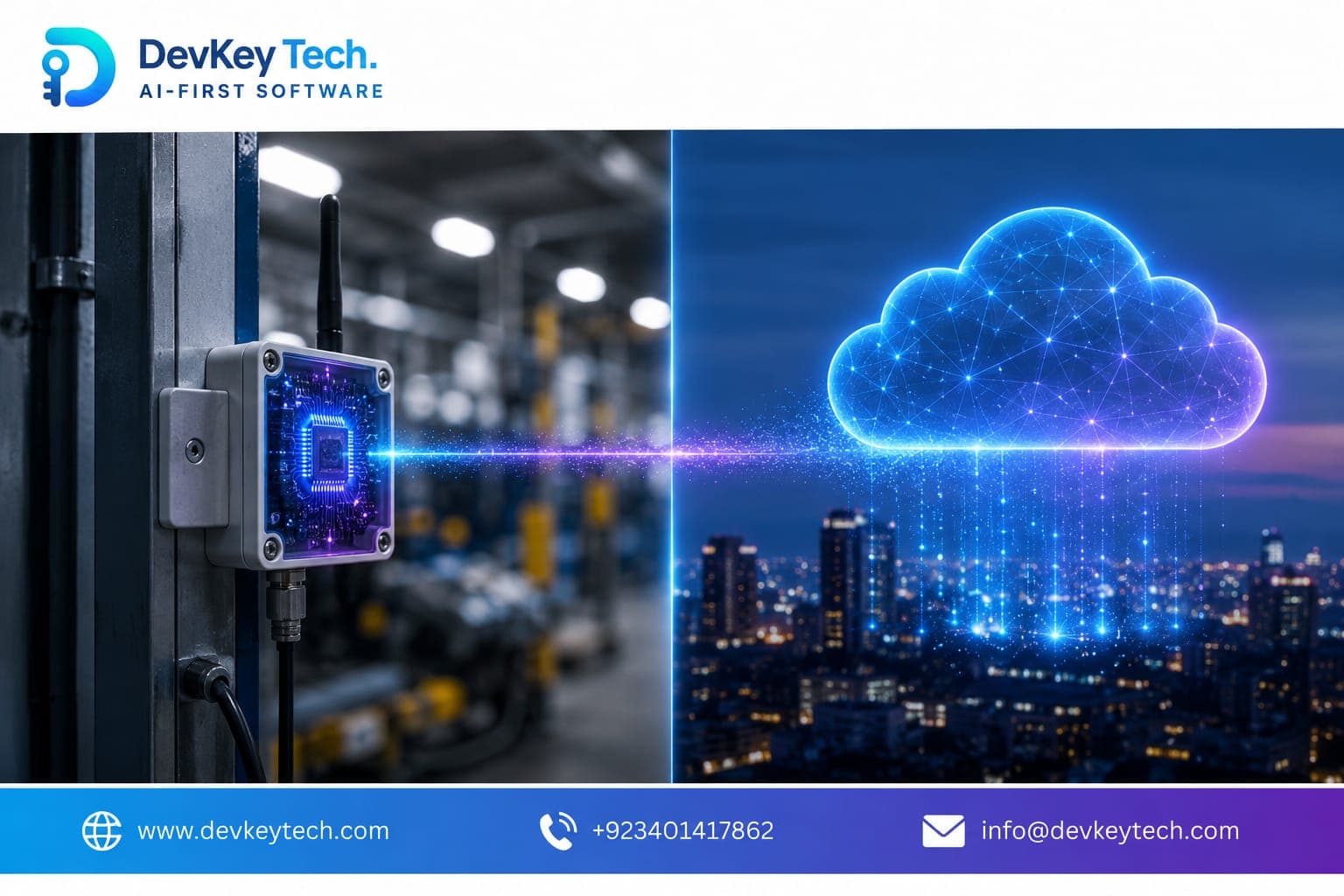
In the world of the Internet of Things (IoT), the conversation around edge processing often begins and ends with latency. And it's true: moving computation closer to data sources — 'to the edge' — drastically reduces the time it takes for devices to react and respond. This is crucial for applications like autonomous vehicles, real-time industrial control, and patient monitoring. However, focusing solely on latency misses a significant portion of the strategic value edge processing delivers. For businesses deploying IoT solutions, understanding these deeper advantages is key to unlocking the full potential and ensuring robust, cost-effective, and secure operations.
What Exactly is IoT Edge Processing?
Before diving into the benefits, let's briefly define our terms. Edge processing involves performing data computation, analysis, and storage closer to the physical location where the data is generated, rather than sending it all to a centralized cloud server. This can mean processing on the IoT device itself, on a local gateway, or on a nearby server. The goal is to minimize the distance data travels, but the impact extends far beyond just speed.
Reduced Bandwidth and Cloud Costs
One of the most tangible, yet often underestimated, benefits of edge processing is its impact on bandwidth consumption and associated cloud costs. Imagine an IoT deployment with thousands of sensors streaming raw data continuously. Sending every byte to the cloud for processing can quickly become prohibitively expensive:
- Lower Data Transfer Volumes: Edge devices can filter, aggregate, and analyze data locally, sending only meaningful insights or critical anomalies to the cloud. Instead of streaming raw video, an edge device might send only a notification when an intruder is detected.
- Optimized Storage: Unnecessary or redundant data can be discarded at the edge, reducing the volume of data that needs to be stored in expensive cloud storage.
- Predictable Costs: By processing more data locally, organizations gain more control over their data transfer and cloud storage expenses, leading to more predictable operational costs over time.
This efficiency can significantly reduce the operational expenditure for large-scale IoT deployments, making ambitious projects financially viable.
Enhanced Security and Data Privacy
Data privacy and security are paramount in any modern IT landscape, and IoT is no exception. Edge processing offers distinct advantages in these areas:
- Reduced Attack Surface: Less data traveling across networks means fewer opportunities for interception or tampering. Sensitive data can be processed and analyzed locally, only sending anonymized or aggregated results to the cloud.
- Data Locality: For regulatory compliance (e.g., GDPR, HIPAA), keeping certain types of data within specific geographic boundaries or even within an enterprise's physical premises is crucial. Edge processing facilitates this by ensuring sensitive information remains local.
- Isolation of Breaches: If one edge device or gateway is compromised, the impact can be isolated, preventing a single breach from exposing an entire cloud-based dataset.
By keeping sensitive information closer to its source and minimizing its exposure, edge processing inherently strengthens the security posture of an IoT system.
Increased Reliability and Resilience
Cloud connectivity isn't always guaranteed, especially in remote or industrial environments. Edge processing builds resilience into your IoT architecture:
- Offline Operation: Edge devices can continue to function, collect data, and even make decisions autonomously even if their connection to the central cloud is lost or intermittent. This is critical for mission-critical applications where continuous operation is non-negotiable.
- Faster Recovery: In the event of a network outage, edge systems can buffer data and resume normal synchronization once connectivity is restored, preventing data loss and ensuring operational continuity.
- Distributed System Stability: A problem in one part of the network or cloud doesn't necessarily bring down the entire system, as edge nodes can maintain local operations.
This robustness ensures that your IoT systems remain operational and effective, even in challenging environments.
Faster Decision Making and Real-time Action
While often grouped under