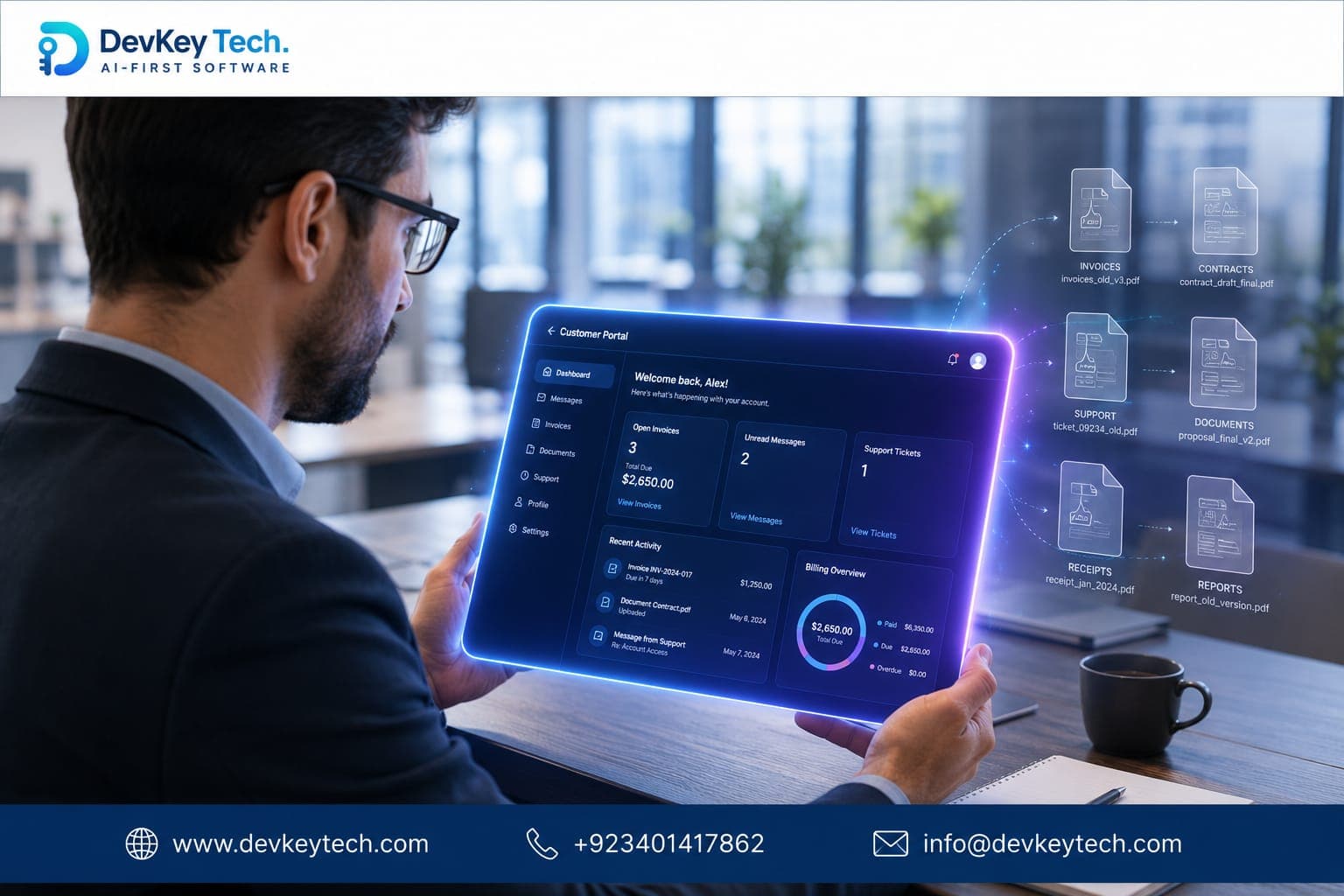
In today's fast-paced digital landscape, the way businesses interact with their customers can make or break relationships. For many, exchanging information still revolves around email attachments, often PDFs, sent back and forth. While seemingly convenient, this method often creates hidden inefficiencies, security risks, and a less-than-ideal customer experience. The question then arises: when does it make sense to move beyond this traditional approach and invest in a dedicated customer-facing portal?
The Hidden Costs of Relying on Email and PDFs
While email is a staple of business communication, using it as the primary channel for critical customer interactions, especially involving documents, has several drawbacks that can accumulate into significant costs over time.
Inefficiency and Manual Overhead
- Time Sink: Sending, tracking, and managing individual emails and attachments is time-consuming. Employees spend valuable hours drafting emails, attaching files, and following up.
- Version Control Nightmares: Keeping track of the latest version of a document becomes a challenge when multiple copies are circulating via email, leading to confusion and errors.
- Repetitive Requests: Customers frequently ask for documents or information they've already received, forcing staff to retrieve and resend.
Security and Compliance Risks
Email, by its nature, is not the most secure channel for sensitive information. Attaching confidential documents like invoices, contracts, or personal data exposes them to:
- Interception Risks: Emails can be intercepted, and attachments can be accessed by unauthorized parties.
- Misdelivery: A simple typo in an email address can send sensitive data to the wrong recipient.
- Lack of Audit Trail: Tracking who accessed what document, and when, is difficult with email, posing compliance challenges for industries with strict regulations.
Poor Customer Experience
Customers expect instant access and self-service. Waiting for a reply, sifting through old emails, or requesting the same document multiple times creates friction and frustration.
Limited Data and Insights
When interactions happen over email, it's challenging to gather meaningful data on customer behavior, engagement, and preferences. This lack of insight hinders your ability to improve services and anticipate needs.
What Exactly is a Customer-Facing Portal?
At its core, a customer-facing portal is a secure, web-based platform that provides your customers with personalized, on-demand access to information, services, and resources relevant to their relationship with your business. Think of it as a personalized dashboard where they can manage their account, access documents, submit requests, and much more, all without needing direct intervention from your staff.
Common functionalities often include:
- Document Access: Securely download invoices, statements, contracts, reports, and other critical documents.
- Account Management: Update contact information, view service history, or manage subscriptions.
- Support & Self-Service: Submit support tickets, access knowledge bases, or track the status of requests.
- Communication Hub: Secure messaging features, notifications, and announcements.
- Order & Service Tracking: Monitor the progress of orders, project milestones, or service appointments.
Key Benefits of Building a Customer Portal
Transitioning to a customer portal offers a multitude of benefits that extend beyond simply replacing email attachments.
Enhanced Customer Experience (CX)
Customers gain 24/7 access to what they need, fostering a sense of control and convenience. This self-service capability reduces frustration and builds stronger loyalty.
Increased Operational Efficiency
By automating document delivery and common customer inquiries, your staff are freed up from repetitive tasks, allowing them to focus on more complex, value-added work. This can lead to significant cost savings in the long run.
Improved Data Security and Compliance
Portals offer robust security features like encrypted connections, multi-factor authentication, and granular access controls, vastly improving the protection of sensitive data compared to email. They also provide comprehensive audit trails.
Better Data Insights and Personalization
A portal centralizes customer interactions, making it easier to track engagement, identify trends, and personalize content or offers, leading to more effective strategies.
Scalability and Growth
As your business grows, a portal can effortlessly handle increasing volumes of customers and data without a proportional increase in manual overhead, making it a scalable solution for future expansion.
Professional Image and Brand Building
A modern, well-designed portal projects a professional image, reinforcing your brand as innovative and customer-centric.
Moving from email-based interactions to a dedicated customer portal isn't just about technology; it's about fundamentally reshaping how you serve your customers, making interactions smoother, more secure, and more insightful for both parties.
When Is a Customer Portal the Right Choice? Decision Factors
Deciding if a customer portal is right for your business involves evaluating several key factors. It's not a one-size-fits-all solution; some businesses genuinely do fine with email.
1. Volume and Frequency of Customer Interactions
Do you frequently exchange documents or information with a large number of clients? If you're routinely sending dozens or hundreds of invoices, reports, or project updates via email each month, the manual effort adds up quickly. A high volume of repetitive interactions is a strong indicator for a portal.
2. Complexity and Sensitivity of Information
Are the documents and information you share complex, requiring detailed tracking or containing sensitive personal or financial data? If so, the enhanced security and organization of a portal become critical.
3. Need for Self-Service and Automation
Do your customers often ask for the same types of information or documents? Could they benefit from managing their own account details or tracking service requests independently? If self-service would significantly reduce inbound queries, a portal is a good candidate.
4. Regulatory Compliance Requirements
Does your industry have strict regulations regarding data privacy, security, and audit trails (e.g., healthcare, finance, legal)? A robust portal can help you meet these compliance obligations more effectively than email.
5. Customer Experience Goals
Is providing a modern, seamless, and convenient experience a top priority for your business? If you aim to stand out through exceptional customer service and empower your clients, a portal is a strategic investment.
6. Growth Projections
Are you anticipating significant business growth? Investing in a portal now can build a scalable foundation that supports future expansion without overwhelming your team with manual tasks.
Getting Started: A Phased Approach
The prospect of building a customer portal can seem daunting, but it doesn't have to be. A phased approach can make the project manageable and ensure you deliver real value quickly.
- Identify Core Needs: Start by mapping out the most common pain points for both your customers and your internal teams regarding information exchange. What's the absolute minimum functionality that would make a significant difference?
- Define Your Minimum Viable Product (MVP): Focus on delivering a core set of features that address these primary pain points first. This could be as simple as secure document sharing and basic account information.
- Partner with Experienced Professionals: Engaging with a software development company that specializes in custom web applications can provide the expertise needed to design, build, and deploy a secure, user-friendly portal tailored to your specific requirements. They can guide you through the process, from initial concept to launch and ongoing support. Explore our custom software development services to learn more.
- Iterate and Expand: Once your MVP is launched and adopted, gather feedback from users and plan future enhancements. A portal is a living system that should evolve with your business and customer needs.
Conclusion
The decision to move from emailing PDFs to building a customer-facing portal is a strategic one that can profoundly impact your operational efficiency, security posture, and customer satisfaction. While not every business needs one, if you find yourself bogged down by repetitive tasks, struggling with security concerns, or falling short of customer expectations, a custom-built portal could be the transformative solution you need. It's an investment in a better future for your business and your customers.
Ready to explore how a custom customer portal could benefit your organization? Contact us today to discuss your specific needs and challenges.