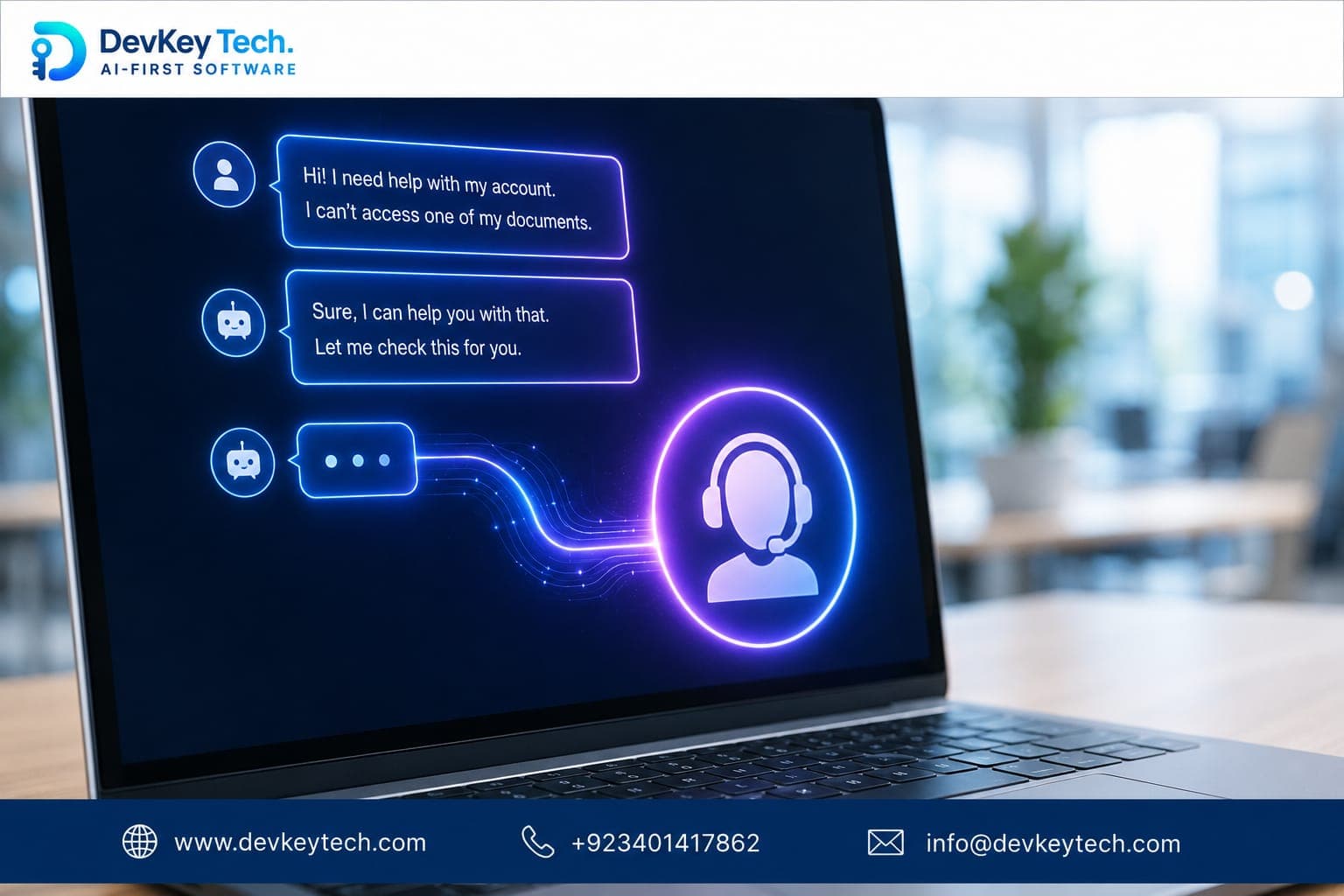
In the evolving landscape of AI-powered customer service and internal operations, conversational agents are becoming increasingly sophisticated. They can handle routine inquiries, guide users through processes, and even provide personalized support. However, even the most advanced AI has its limits. The true mark of a well-designed AI system isn't just its ability to solve problems, but its intelligence in knowing when not to – when to recognize its boundaries and gracefully hand off to a human agent.
Why a Seamless AI-to-Human Handoff is Crucial
A poorly executed handoff can quickly erode user trust and negate all the efficiency gains an AI might offer. Imagine repeatedly explaining your issue to an AI, only for a human to pick up the conversation with no context, forcing you to start from scratch. This friction leads to frustration, extended resolution times, and a diminished perception of your service.
- Enhanced User Experience: Users feel heard and valued when their complex or sensitive issues are escalated appropriately and handled with continuity.
- Operational Efficiency: Human agents can focus on high-value, complex tasks that truly require their unique skills, rather-than boilerplate responses.
- Brand Reputation: A smooth, intelligent handoff demonstrates thoughtfulness and a commitment to solving user problems, even when the AI cannot.
- Data Collection for Improvement: Each handoff provides valuable data points, indicating areas where the AI's knowledge base or conversational capabilities can be expanded.
Identifying the Handoff Triggers: When AI Should Step Aside
The core of an effective handoff strategy lies in defining clear, actionable triggers. These are the signals that tell the AI agent it's time to bring in human expertise. Triggers can be explicit or implicit.
Explicit Handoff Triggers
- Direct User Request: The most straightforward trigger is when a user explicitly states they want to speak to a human. Phrases like "Connect me to an agent," "I want to talk to a person," or "Human support" should immediately initiate a handoff.
- Escalation Commands: Specific keywords or commands designed to signal an escalation need, even if not directly asking for a human, e.g., "I need to file a complaint."
Implicit Handoff Triggers
These are more sophisticated and often require Natural Language Processing (NLP) and machine learning models to detect.
- Sentiment Analysis: If the user's language indicates high frustration, anger, or extreme dissatisfaction, an immediate handoff might be warranted to de-escalate the situation.
- Repeated Utterances/Looping: When a user rephrases the same question multiple times, or the AI repeatedly provides the same answer without progress, it suggests the AI is stuck and unable to resolve the query.
- Unrecognized Intents or Out-of-Scope Queries: If the AI cannot confidently map a user's input to any known intent, or if the query falls outside its defined knowledge domain, a handoff is appropriate.
- Complexity Thresholds: Certain types of queries, even if understood, might be flagged as inherently complex, requiring nuanced human judgment. This could be based on the number of entities mentioned, the depth of follow-up questions required, or the sensitivity of the topic.
- Lack of Data/Knowledge Base Gaps: If the AI searches its knowledge base for an answer and comes up empty, or if the available information is outdated or insufficient.
Example of a Handoff Trigger Logic (Conceptual):
IF user_input CONTAINS ("human" OR "agent" OR "person") THEN handoff_to_human()
ELSE IF sentiment_score < -0.7 THEN handoff_to_human()
ELSE IF intent_confidence < 0.5 AND attempts_to_clarify > 2 THEN handoff_to_human()
ELSE IF query_topic IN ("legal dispute", "complex billing error") THEN handoff_to_human()
ELSE process_with_ai()
Designing the Handoff Flow: From AI to Agent
Once a handoff is triggered, the transition itself must be carefully choreographed to maintain continuity and efficiency.
1. Acknowledge and Inform the User
Always tell the user what's happening. Transparency builds trust.
- "I understand this is a complex issue. I'm connecting you with a human agent who can provide more in-depth assistance."
- "It seems I'm having trouble understanding your request fully. Let me connect you with one of our support specialists."
2. Collect Essential Context
The AI should gather as much relevant information as possible before the handoff. This pre-populates the human agent's interface and prevents the user from repeating themselves.
- Transcript of the Conversation: The full chat history is paramount.
- User's Stated Problem: A summary of the core issue.
- Relevant Account Details: If applicable and accessible, e.g., order numbers, recent activities.
- AI's Last Confident Intent: What the AI thought the user was trying to do.
- Reason for Handoff: Which trigger was activated (e.g., "user requested human," "sentiment too negative," "out-of-scope query").
Example of Handoff Context (JSON):
{
  "handoff_timestamp": "2023-10-27T10:30:00Z",
  "user_id": "UX12345",
  "conversation_id": "CONV67890",
  "reason_for_handoff": "User_Expressed_Frustration",
  "ai_last_intent": "OrderTracking",
  "user_summary_by_ai": "User is frustrated about a delayed order #XYZ and repeatedly asked for a refund status.",
  "chat_transcript_snippet": [ /* ... last N messages ... */ ]
}
3. Select the Right Human Agent
If possible, route the user to an agent with the specific expertise needed for the handoff reason. This might involve tagging the handoff with a specific department or skill set.
4. Monitor and Iterate
Handoffs aren't a set-and-forget mechanism. Continuously monitor handoff rates, user satisfaction post-handoff, and agent feedback. This data is invaluable for refining AI capabilities and improving handoff triggers.
Best Practices for Handoff Design
- Test Thoroughly: Simulate various scenarios, including edge cases and frustrated users, to ensure the handoff works as expected.
- Empower Human Agents: Ensure agents are well-trained on how to pick up AI-initiated conversations and leverage the provided context effectively.
- Maintain a Consistent Voice: While the agent is human, try to maintain a consistent brand voice across the AI and human interactions.
- Provide an Escape Hatch: Always offer an obvious path to human assistance, even if it's buried a few layers deep for less common scenarios.
- Avoid Blame: Never frame the handoff as the AI failing. Instead, present it as a natural progression to specialized support.
- Iterate Based on Feedback: Regularly review handoff reasons and outcomes. Is the AI handing off too often for simple queries? Or not often enough for complex ones? Adjust parameters accordingly.
Designing effective AI-to-human handoff moments is a critical component of building robust, user-centric AI systems. It's about recognizing the symbiotic relationship between AI efficiency and human empathy, ensuring that users always receive the best possible support, whether from a machine or a person. By thoughtfully implementing these strategies, organizations can deliver superior customer experiences and optimize their operational workflows.
If your organization is looking to develop intelligent conversational AI solutions with seamless user experiences, exploring custom software development or getting in touch with experts can help build systems that truly understand when to engage and when to escalate.