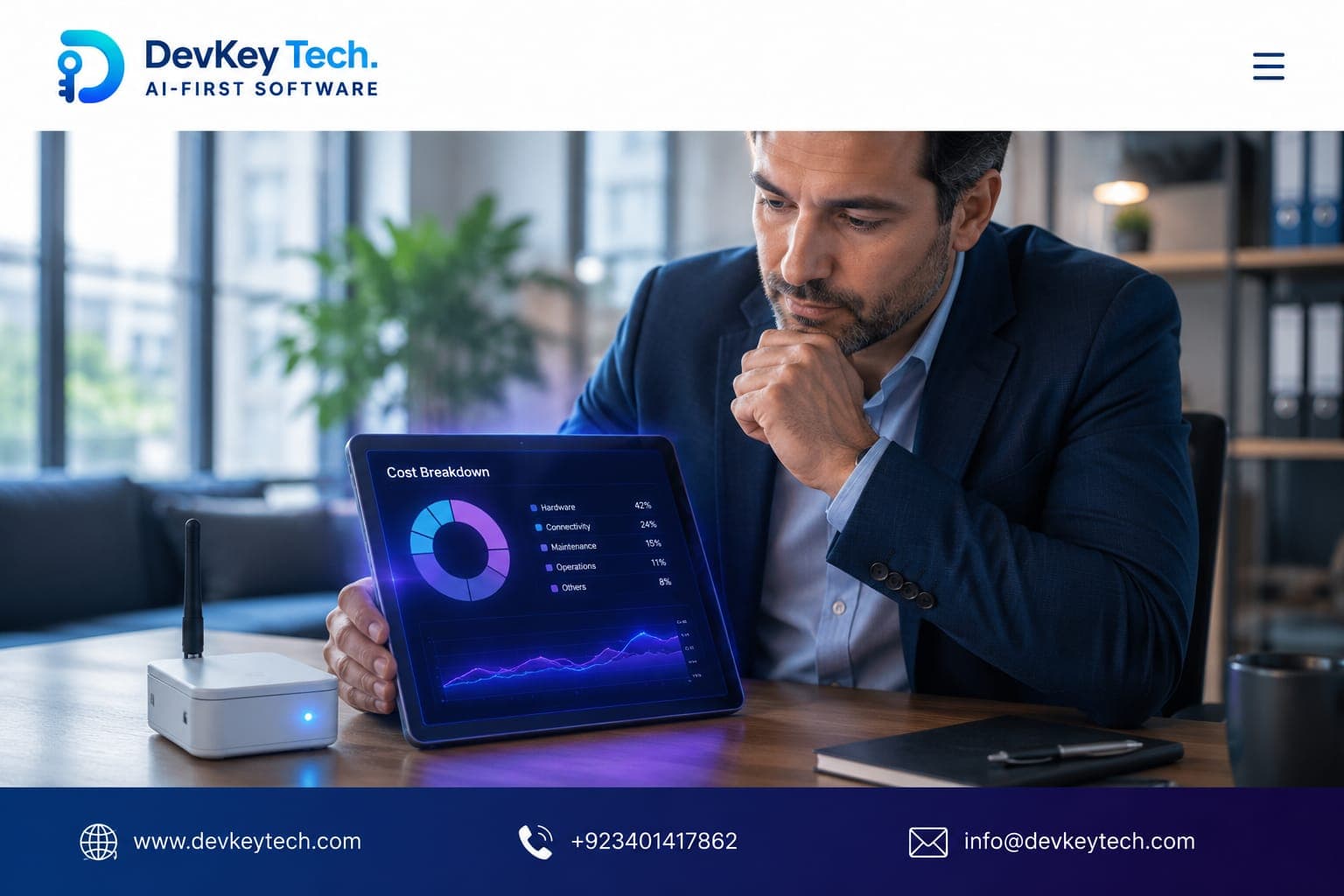
Embarking on an Internet of Things (IoT) project promises transformative potential, but for many founders, the initial pilot phase can quickly become a black box of unforeseen expenses. A successful pilot isn't just about proving technical feasibility; it's about understanding the real-world costs involved before committing to a full-scale rollout. This article cuts through the hype to lay bare the primary cost drivers of an IoT pilot, helping you budget realistically and avoid common pitfalls.
Beyond the Sticker Price: Why IoT Pilot Costs Add Up
An IoT pilot project isn't merely a smaller version of a full deployment. It's an exploratory phase designed to validate assumptions, test technology, and gather initial data in a controlled environment. Because of this focus on learning and iteration, its cost structure can be surprisingly complex. Many founders underestimate costs in several key areas, leading to budget overruns or a premature halt to promising initiatives.
1. Hardware: The Tangible Foundation
The devices that collect and transmit data are often the most visible cost, but even here, nuances matter.
Sensors & End Devices
- Selection & Prototyping: Initial costs involve researching, purchasing, and testing various sensors (temperature, humidity, motion, GPS, etc.) and microcontrollers (e.g., ESP32, Raspberry Pi, Arduino, specialized industrial modules). For a pilot, you might start with off-the-shelf development kits, but customizing enclosures or integrating specific sensors will add to the bill.
- Volume: Even for a pilot, you'll need multiple units to gather meaningful data and test robustness. Consider the cost per unit, plus spares.
- Industrial Grade vs. Consumer: Consumer-grade devices are cheaper but often lack the durability, security, or certifications required for real-world, long-term deployments. Pilots frequently uncover the need to upgrade to more robust (and expensive) hardware.
Gateways & Edge Devices
- If your architecture requires local data processing or aggregation before sending to the cloud, you'll need gateways. These can range from simple Wi-Fi routers to powerful industrial PCs. Their cost depends on processing power, number of ports, ruggedness, and required certifications.
2. Connectivity: Bridging the Gap
Getting your data from the device to the cloud is a critical, ongoing expense. The best choice depends on your application's data volume, latency requirements, range, and power constraints.
Network Infrastructure & Data Plans
- Cellular (LTE-M, NB-IoT): Offers wide coverage but comes with monthly data plan costs per device. SIM cards, activation fees, and managing multiple carriers can add complexity.
- LPWAN (LoRaWAN, Sigfox): Ideal for low-data, long-range applications. Costs include purchasing and deploying gateways if you're building a private network, or subscription fees if using a public network provider.
- Short-Range (Wi-Fi, Bluetooth): Leverages existing infrastructure but has range limitations. The main costs are device modules and integration.
- Ethernet: Reliable and high-bandwidth, but limits device mobility and requires physical cabling.
Each connectivity option has different setup and operational costs that need to be factored into the pilot's budget.
3. Cloud Infrastructure & Platform Services: Data's Destination
Once data leaves your devices, it needs a home and a brain. This is where cloud providers like AWS, Azure, and Google Cloud come in, offering a vast array of services, each with its own cost structure.
- Data Ingestion: Services to securely receive data from potentially thousands of devices (e.g., AWS IoT Core, Azure IoT Hub). Costs often scale with messages ingested.
- Data Storage: Databases for raw telemetry (e.g., DynamoDB, Time Series Insights) and processed data. Costs vary by storage volume and access patterns.
- Data Processing & Analytics: Services to transform, clean, and analyze incoming data (e.g., AWS Lambda, Azure Stream Analytics). This includes machine learning services if your pilot involves predictive analytics.
- Visualization & Dashboards: Tools to make sense of your data (e.g., Grafana, Power BI, custom web applications).
- Platform Choice: Opting for a fully managed IoT PaaS (Platform as a Service) can reduce development time but might have higher recurring costs than building on IaaS (Infrastructure as a Service) components.
Pro Tip: Cloud costs can spiral if not properly managed. Implement robust monitoring and set spending alerts from day one.
4. Software Development: The Brains Behind the Operation
This is often the largest and most variable cost. It includes everything from low-level device code to user-facing applications.
Device Firmware Development
- Writing, testing, and debugging the code that runs on your IoT devices. This requires specialized embedded systems expertise and can be time-consuming, especially for power-constrained devices.
Backend Development & APIs
- Building the cloud-side logic to process, store, and manage device data. This involves setting up databases, APIs for communication, and business logic for your application.
User Interface (Dashboard/App)
- Developing a web or mobile application to monitor devices, visualize data, send commands, and manage users. This requires frontend development skills and UX design.
Integration with Existing Systems
- If your IoT solution needs to integrate with your current ERP, CRM, or other legacy systems, this adds significant development complexity and cost. Integrating custom software often requires specialized knowledge of existing APIs and data structures.
5. Data Security: Non-Negotiable Investment
Neglecting security is not an option in IoT. Security should be baked in, not bolted on, and this comes with a cost.
- Device-Level Security: Secure boot, secure storage, hardware-backed root of trust, secure over-the-air (OTA) updates. Implementing these can add to hardware cost and firmware development complexity.
- Network Security: Encrypted communication, secure protocols (e.g., TLS/SSL), network segmentation.
- Cloud & Data Security: Access control, identity management, data encryption at rest and in transit, auditing, and compliance.
- Expertise: Hiring or consulting with cybersecurity experts to audit your pilot's architecture is a crucial, often overlooked, expense.
6. Deployment, Testing, and Iteration: Getting It Right
A pilot isn't just about building; it's about deploying and learning.
- Physical Installation & Configuration: Labor costs for physically installing devices, configuring gateways, and ensuring they operate correctly in their intended environment.
- Testing & Validation: Rigorous testing of data accuracy, device reliability, network performance, and system security. This includes field testing under various conditions.
- Pilot Scope & Iteration: A pilot often uncovers unexpected challenges or new opportunities. Budget for iteration – refining hardware, adjusting firmware, or tweaking cloud logic based on initial findings. The goal is learning, and learning implies change.
7. Expertise & Project Management: The Invisible Driver
The most critical, yet often least accounted for, cost is the human expertise required to navigate the complex IoT landscape.
- Specialized Skills: IoT demands a blend of embedded systems, cloud engineering, data science, cybersecurity, and network engineering. Finding and retaining talent with these diverse skills is expensive.
- Internal Team vs. External Partners: If you lack in-house expertise, partnering with an experienced custom software development company can accelerate your pilot, reduce risk, and provide access to a full stack of IoT specialists. While an upfront investment, it often saves money and time in the long run by avoiding costly mistakes.
- Project Management: Coordinating hardware procurement, software development, cloud setup, and deployment across multiple teams or vendors requires strong project management, which has a tangible cost.
Planning for Real IoT Success
An IoT pilot project is an investment in future efficiency, innovation, or new revenue streams. By understanding and proactively budgeting for these diverse cost drivers – from the smallest sensor to the most complex cloud service and the expertise that ties it all together – you can approach your IoT initiatives with confidence and significantly increase your chances of success. Don't let the complexity deter you; instead, arm yourself with a clear understanding of the financial landscape.
If you're considering an IoT pilot and need a partner with deep engineering expertise to guide your project from concept to completion, feel free to reach out to DevKeyTech. We help businesses build robust, scalable, and secure IoT solutions.