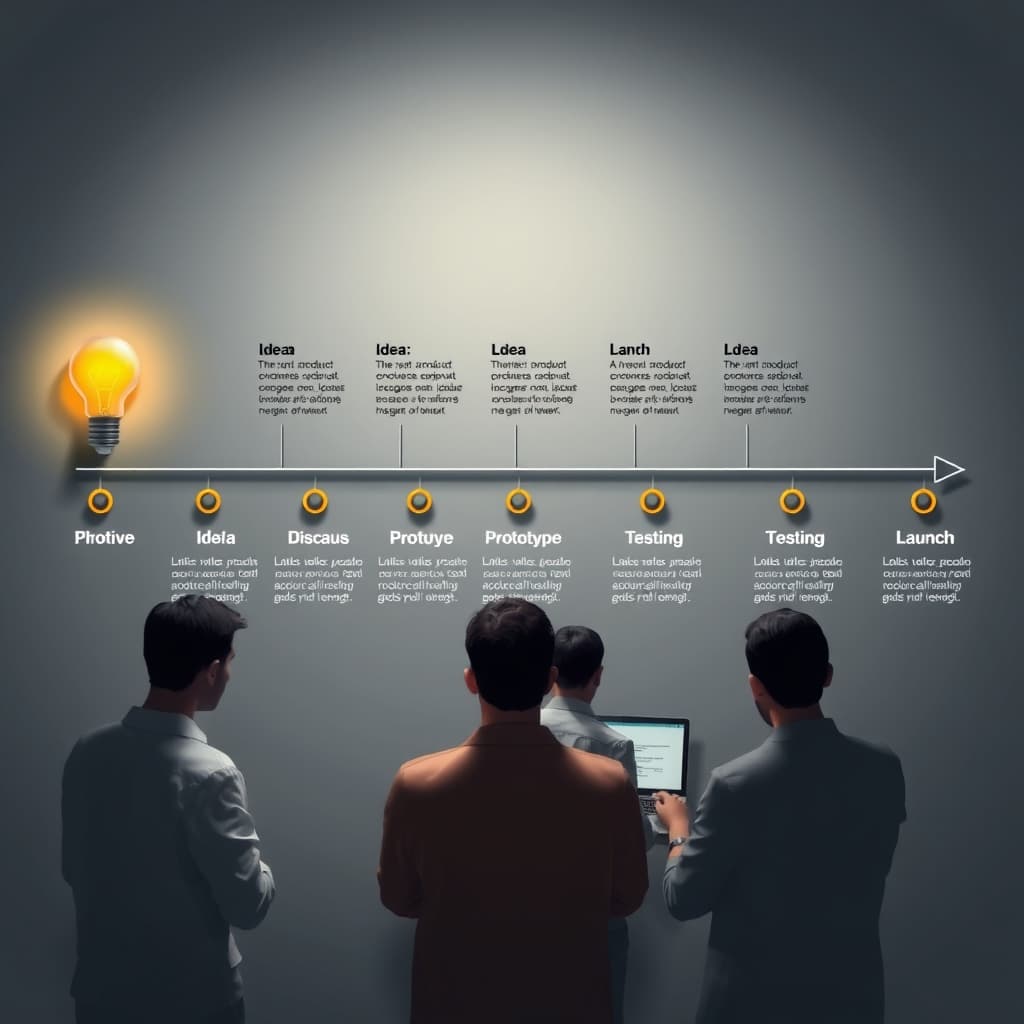
A realistic 12-week MVP development process focuses on delivering core value quickly to validate your idea. This structured plan guides founders through discovery, design, build, and launch, emphasizing continuous validation to refine their product based on real user feedback and market needs. It’s an aggressive timeline, achievable with clear scope and focus.
The 12-Week MVP Development Process: An Overview
Building a Minimum Viable Product (MVP) in 12 weeks is ambitious but entirely feasible when executed with discipline and a clear vision. The goal isn't to build a perfect product, but rather the smallest possible version that solves a core user problem and allows you to gather meaningful feedback. This plan prioritizes speed, learning, and iteration over feature completeness.
Key principles for this accelerated timeline:
- Extreme Focus: Ruthlessly prioritize the absolute core functionality.
- Continuous Feedback: Integrate user feedback early and often.
- Agile Execution: Work in short, iterative cycles.
- Resource Efficiency: Leverage existing tools and frameworks where possible.
Remember, an MVP is not about building less; it's about learning more, faster.
While this 12-week framework provides a strong roadmap, it's important to understand that every project has unique variables that can influence the timeline. This plan assumes a dedicated team, clear initial requirements, and minimal external dependencies.
Week-by-Week Breakdown: A Realistic 12-Week MVP Plan
Weeks 1-2: Discovery & Planning (Foundation)
This initial phase is critical for defining the problem you're solving and identifying the core features needed to address it. It's about setting the stage for efficient development.
- User Story Mapping & Problem Definition: Clearly articulate the primary problem your MVP will solve for a specific user segment. Map out the critical user journeys and actions.
- MVP Scope Definition: Distill the identified user stories into the absolute minimum set of features required to deliver value. Challenge every feature: Is it essential for validation?
- High-Level Technical Architecture: Outline the core components, tech stack (e.g., frontend framework, backend language, database), and potential third-party integrations needed. This isn't deep design, but a foundational understanding.
- Team Alignment: Ensure everyone involved understands the MVP's scope, goals, and success metrics.
Weeks 3-4: Design & Prototyping (Visualizing)
With a clear scope, it's time to translate ideas into tangible designs that can be tested and built.
- User Flows & Wireframing: Create basic wireframes and user flows to visualize the user journey through the core features. Focus on usability and clarity, not aesthetics.
- Data Model Definition: Design the core database schema. This includes identifying entities, attributes, and relationships crucial for the MVP's functionality. A solid data model prevents significant rework later.
- Interactive Prototype (Low-Fidelity): Develop a clickable prototype (e.g., using Figma, Sketch, or even basic HTML/CSS mockups) to simulate the core user experience.
- Early User Feedback: Conduct informal usability tests with a small group of target users using the prototype. Gather feedback on clarity, ease of use, and whether it solves their problem.
Weeks 5-9: Development & Integration (Building the Core)
This is the most intensive phase, where the design becomes a functional product. Work will typically be organized into short, agile sprints.
- Backend Development: Build the API endpoints, business logic, and integrate with the defined database. Focus on robust, clean code for the core functionalities.
- Frontend Development: Develop the user interface components based on the approved prototype. Ensure responsiveness for target devices.
- Database Implementation: Implement the designed data model, set up migrations, and seed initial data if necessary.
- API Integrations: Integrate critical third-party APIs (e.g., payment gateways, authentication services) that are essential for the MVP's core functionality. Prioritize integrations that are non-negotiable for launch.
- Version Control & CI/CD Setup: Establish a robust Git workflow and basic Continuous Integration/Continuous Deployment pipelines to automate testing and deployment processes.
Weeks 10-11: Testing & Refinement (Quality Assurance)
Rigorous testing ensures the MVP is functional, stable, and delivers the intended user experience.
- Unit Testing: Developers write tests for individual components and functions.
- Integration Testing: Verify that different modules and services within the application communicate correctly.
- User Acceptance Testing (UAT): Engage a group of real users (or key stakeholders representing users) to test the application against the defined user stories and provide feedback.
- Bug Fixing & Performance Optimization: Address all critical bugs identified during testing. Perform basic performance checks to ensure the application is responsive.
- Deployment Pipeline Finalization: Ensure the production deployment process is smooth and repeatable.
Week 12: Launch & Initial Measurement (Go Live & Learn)
The culmination of the development effort, but also the beginning of continuous validation.
- Deployment to Production: Carefully deploy the MVP to its live environment.
- Analytics Setup: Implement tools to track key user behaviors, feature usage, and conversion rates (e.g., Google Analytics, custom event tracking).
- User Onboarding & Support: Prepare basic onboarding materials and a channel for user support and feedback.
- Initial Performance Monitoring: Continuously monitor the application's stability, performance, and user engagement immediately after launch.
What Can Change the 12-Week Timeline?
While a 12-week MVP development process is achievable, several factors can extend the timeline:
- Scope Creep: Adding features beyond the initial, validated MVP scope is the most common reason for delays. Every additional feature adds development, testing, and potential integration time.
- Technical Complexity: Unforeseen technical challenges, integrating with complex legacy systems, or new and untested technologies can introduce delays.
- Resource Availability & Team Expertise: A shortage of skilled developers, designers, or project managers, or a lack of specific domain expertise, can slow progress.
- External Dependencies: Reliance on third-party APIs, external partners, or client approvals can introduce waiting periods outside the development team's control.
- Stakeholder Feedback Cycles: Delays in receiving feedback or frequent changes in direction from founders or key stakeholders can disrupt development sprints.
- Poorly Defined Requirements: Ambiguous user stories or technical specifications lead to rework and misaligned development efforts.
At DevKey Technologies, we emphasize clear communication and proactive scope management to mitigate these risks and keep your project on track. Learn more about our approach to custom software development.
Why Validation Doesn't End at Launch
Launching your MVP is not the finish line; it's the start of the next phase of learning. The