
AI AgentDevelopment
An agent that takes a goal, decides which of your tools to use, completes the steps, and asks for approval before anything consequential.
AI Agent Development: what the work involves
Some work is not one question and one answer. Researching a supplier, reconciling a customer's order across three systems, or preparing a weekly report means looking things up, deciding what to do next, and repeating until finished. A human spends an hour switching between tabs. A simple chatbot cannot help because it only talks; it cannot fetch, compare or act.
An agent is a language model placed in a loop with tools. We define a small set of narrow tools, such as search a record, read a spreadsheet, draft an email or create a ticket, each with strict inputs and permissions. The model chooses a tool, sees the result, and continues until the goal is met or a step limit is reached. Actions that change data or contact people pause for human approval. Every step is logged as a readable trace. We start with read-only tools, evaluate on a set of realistic tasks, and grant write access gradually.
Core features
Narrow, typed tools
Each tool does one thing with validated inputs, so the agent cannot wander beyond what you intended.
Plan and step limits
The agent works toward a goal inside a cap on steps and cost, and stops to report if it is going in circles.
Approval gates
Anything that sends, spends, deletes or edits waits for a person to approve, with the proposed action shown plainly.
Readable run traces
You can open any run and see what the agent thought, which tool it called, and what came back.
Memory of task context
Relevant facts from earlier in a task or earlier tasks are stored and recalled so work is not repeated.
Scenario evaluation
A suite of realistic tasks with known good outcomes is replayed after each change to catch regressions.
What we get right before launch
Compounding errors
A small mistake early in a long chain can carry through. We keep chains short, validate intermediate results, and prefer a clear failure message over a plausible guess.
Tool permissions and injection
Text the agent reads, such as a web page or email, can contain instructions meant to hijack it. Tools run with least privilege, and untrusted content never grants authority.
Cost and latency
Every loop iteration costs tokens and seconds. We measure cost per completed task and use a smaller model for routine steps and a stronger one only where reasoning is needed.
Tools and technology
- Anthropic Claude
- OpenAI
- LangChain
- Python
- FastAPI
- pgvector
- n8n
- PostgreSQL
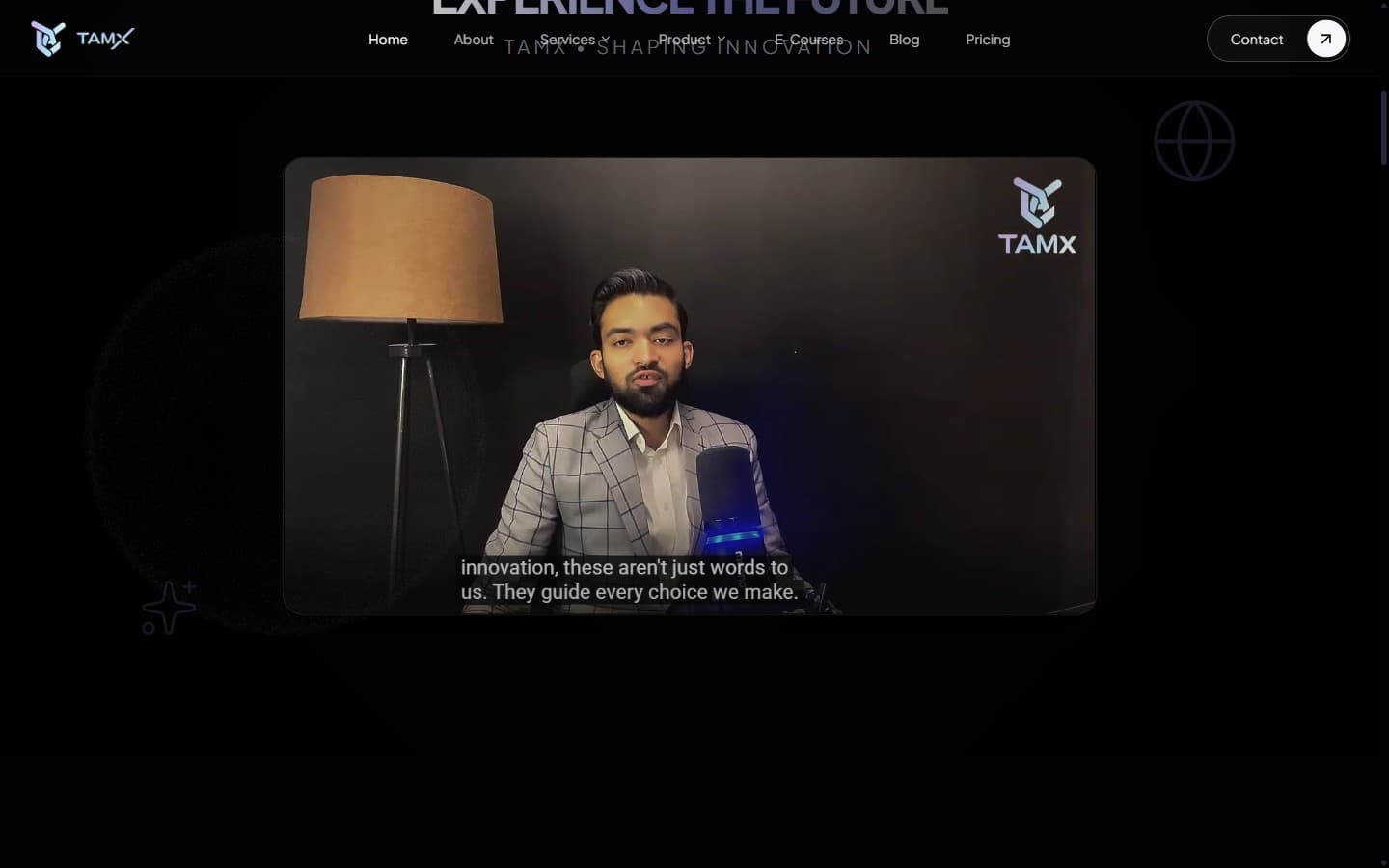
Related work · AI Agency Website
TAMx
An AI-powered digital agency website — generative AI, chatbots, LLM integration, computer vision, and automation, plus products like an LMS and CRM, presented for startups and enterprises worldwide.
Common questions, answered
How is an agent different from a chatbot?
A chatbot answers within a conversation. An agent pursues a goal by calling tools, such as lookups or drafts, over several steps. That power is why it needs permissions, limits and approvals that a simple chatbot does not.
Can an agent be trusted to act alone?
For low-risk, reversible tasks, often yes after testing. For anything involving money, customers or deletion, we recommend a human approval step. Autonomy is earned task by task using logged evidence.
Which tasks suit agents well?
Multi-step work with clear success criteria and available tools: research, reconciliation, report assembly, triage. Tasks that need subjective judgement or have severe consequences if wrong are better kept with people.
What if the agent gets stuck?
It stops at a step limit and returns what it found plus where it was blocked. You see the full trace, so you can finish manually or adjust the tools.
More AI Agents & Automation services
All AI Agents & Automation servicesMulti-Agent System Development
Several specialised agents that hand work to each other, with a reviewer in the loop, for jobs too broad for one prompt to do well.
LLM Integration Services
Add summarising, extraction, drafting or classification to the software you already run, built as an engineered feature with tests, limits and logs.
Workflow Automation Services
Replace copy-paste between tools with reliable automated flows, using AI for the messy steps and plain logic for everything else.
Ready to start your AI Agent Development project?
Tell us what you need and we will come back with a clear scope, timeline and the questions worth answering before any build starts.