
AI Content GenerationPipelines
A production line for written content where research, drafting, checking and formatting are separate steps, and an editor signs off before publishing.
AI Content Generation Pipelines: what the work involves
Publishing content regularly means repeating the same chain: choose a topic, gather facts, write, edit, add links and metadata, format for the CMS. When one writer does everything, quality swings with their workload. When teams paste prompts into a chat window, the results vary, the sources are unclear, and nobody can tell which claims were verified.
We build the chain as a pipeline of controlled steps. A brief is expanded into an outline, retrieval pulls facts from sources you trust, and a drafting step writes only from those passages, keeping source references attached. A checking step compares each factual statement with its source and flags unsupported ones. Style rules are enforced by a final pass, then formatting, internal links and metadata are produced, and the piece lands in your CMS as a draft. Editors see the sources beside the text. We measure on sample briefs, tune each step separately, and keep the pipeline honest by logging what was used.
Core features
Brief-to-outline step
A short brief becomes a structured outline with intent, audience and required points, reviewed before drafting starts.
Source-grounded drafting
The writing step uses retrieved passages from your trusted sources and keeps references attached to each claim.
Fact-check pass
A separate check compares statements with their sources and flags anything unsupported for the editor.
Style and compliance rules
Voice, banned claims, required disclaimers and reading level are enforced consistently on every piece.
CMS-ready output
Headings, metadata, internal links and image slots arrive as a draft in WordPress, Strapi or your own system.
Editor review view
Editors see the text next to its sources and flags, and can accept, edit or send a section back through the pipeline.
What we get right before launch
Thin or duplicate content
Search engines and readers penalise pages with nothing original. We require specific inputs such as data, experience or quotes, and measure similarity across pieces before publishing.
Factual errors and invented sources
Models can fabricate figures and citations. Claims must trace to retrieved material, uncited statements are flagged, and humans verify anything that matters.
Disclosure and copyright
Rules on AI-generated content and source reuse differ by platform and industry. We help you set a disclosure approach and avoid copying protected text.
Tools and technology
- OpenAI
- Anthropic Claude
- LangChain
- pgvector
- Python
- FastAPI
- WordPress API
- n8n
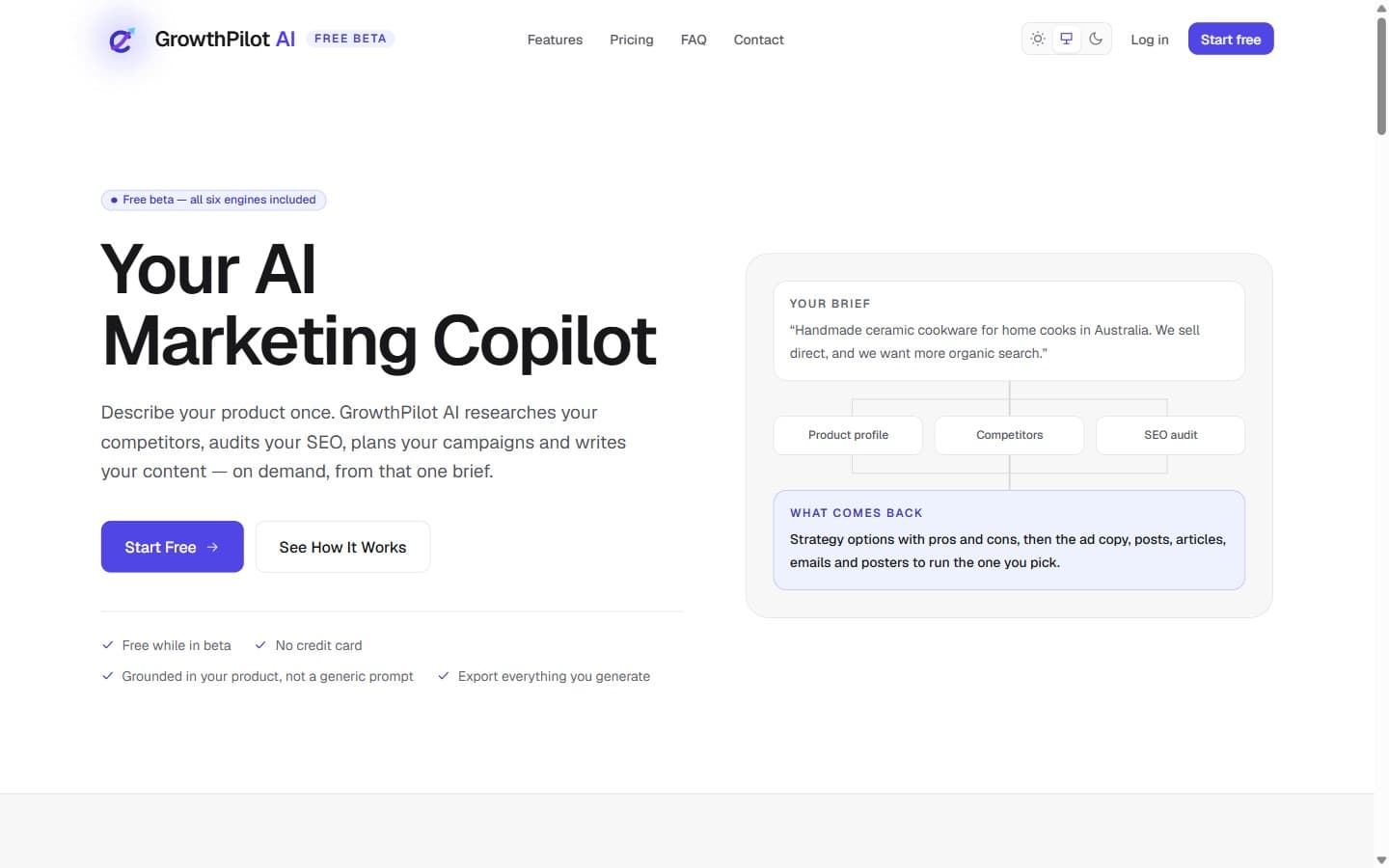
Related work · AI Marketing SaaS
GrowthPilot AI
Describe your product once. GrowthPilot AI researches your competitors, audits your SEO, plans your campaigns and writes the content to run them — six AI engines working from a single brief.
Common questions, answered
Can this publish directly without review?
Technically yes, but we advise against it for anything public. Drafts should be reviewed by an editor, who can see sources and flags beside the text. Automation speeds the work; it should not remove accountability.
How do you prevent made-up facts?
The writer step may only use retrieved passages, a separate step checks claims against them, and unsupported statements are flagged. This reduces fabrication substantially but cannot eliminate it, so review remains.
Will search engines penalise AI-assisted content?
Search engines focus on usefulness, not the tool. Thin, repetitive pages do poorly whoever wrote them. We design for original inputs and editorial oversight rather than volume for its own sake.
Can it write in our brand voice?
Reasonably well, given examples and rules. We encode tone guidance, sample passages and banned phrases, then test on briefs and adjust until editors say it reads like you.
More AI Agents & Automation services
All AI Agents & Automation servicesSocial Media Content Automation
A steady posting rhythm from a content queue where AI drafts, you approve, and the schedule publishes itself.
AI Product Description Generation
Fill a catalogue of thousands of products with consistent, factual descriptions written from your own attribute data, not from imagination.
Marketing Automation with AI
Journeys that respond to what each contact actually did, with AI drafting and sorting the work and your team approving what gets sent.
Ready to start your AI Content Generation Pipelines project?
Tell us what you need and we will come back with a clear scope, timeline and the questions worth answering before any build starts.