
Multi-Vendor MarketplaceDevelopment
A marketplace is two businesses at once: a storefront for buyers and a toolset for sellers. We build both sides, plus the commission and payout engine that holds them together.
Multi-Vendor Marketplace Development: what the work involves
A single-brand shop owns its stock. A marketplace owns nothing except trust, and that changes what has to be built. Sellers need to sign up, prove who they are, upload products and manage their own orders. Buyers need confidence that a stranger will ship what was promised. The platform in the middle must collect money, take its cut, release funds at the right moment and referee when something goes wrong. Skipping any of those layers is how marketplaces end up as listing pages with a manual accounting problem behind them.
We model vendors, products, sub-orders and ledger entries as separate records from the start, so one basket containing items from three sellers becomes three independently trackable fulfilments under a single payment. Vendor dashboards, admin approval queues and commission rules are built as real features, not afterthoughts. Next.js keeps listing pages fast for search, and PostgreSQL row-level rules keep each vendor strictly inside their own data.
Core features
Vendor onboarding and approval
Sellers apply with business details and documents, an admin reviews them, and only approved vendors can publish listings or receive payouts.
Split orders from one basket
A buyer pays once; the order divides into per-vendor sub-orders with their own status, tracking and shipping rules.
Commission and fee engine
Configure commission by category, vendor tier or promotion, and see every deduction as a line in a transparent ledger.
Payout scheduling
Funds are held until delivery is confirmed or a return window closes, then released to vendor bank accounts or wallets in scheduled batches.
Vendor dashboard
Each seller manages catalogue, stock, orders, earnings and customer questions from a dedicated area that cannot see anyone else's data.
Disputes and reviews
Buyers can open a dispute on a sub-order, admins mediate with evidence on file, and verified-purchase reviews feed vendor reputation.
What we get right before launch
Holding and moving other people's money
Collecting funds then paying sellers can trigger payment-provider and regulatory requirements. We design around the gateway's marketplace features and keep a full audit trail, and advise you to confirm obligations locally.
The cold-start problem
A marketplace with no sellers repels buyers and vice versa. Bulk product import, seller-friendly onboarding and a focused launch category matter as much as the code.
Quality control at scale
Without moderation, duplicate listings and misleading photos erode trust. Review queues, reporting tools and clear listing rules need to exist before volume arrives.
Tools and technology
- Next.js
- React
- TypeScript
- Supabase / PostgreSQL
- Stripe Connect
- JazzCash
- Easypaisa
- Cloudinary
- Meilisearch
- Vercel
Related work · Multi-Vendor Marketplace
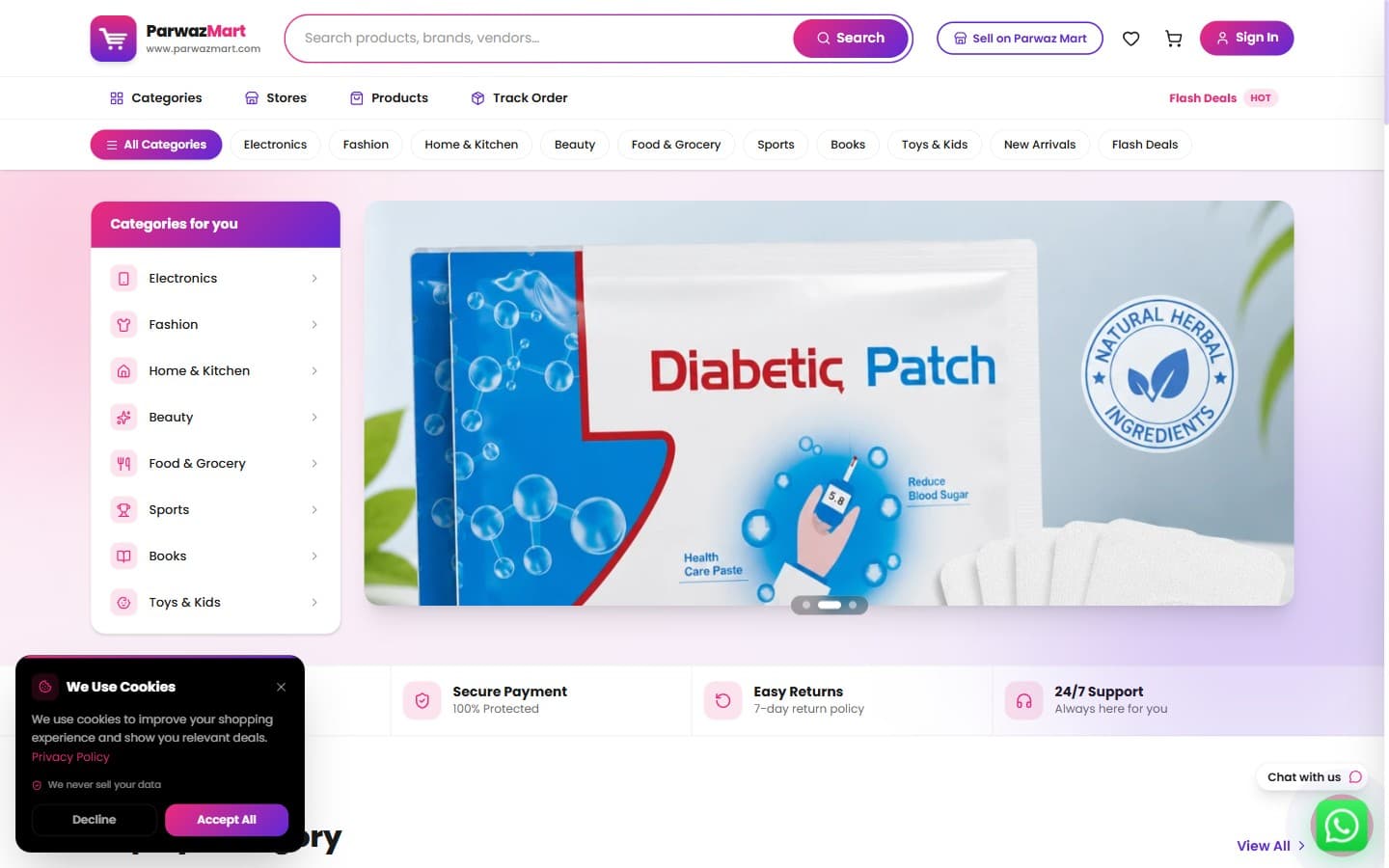
Parwaz Mart
Shop More, Save More, Smile More — a full multi-vendor e-commerce marketplace connecting 1,000+ sellers with shoppers across Pakistan, with vendor storefronts, flexible payments, and fast delivery.
Common questions, answered
How are commissions and payouts handled?
Every sale writes ledger entries for the vendor share, the platform commission and any fees. Payouts release on rules you set, such as after delivery confirmation, and each batch is exportable for your accountant.
Can vendors manage their own shipping?
Yes. Each vendor can define their own shipping zones and methods, or you can centralise logistics through one courier. Sub-orders carry separate tracking either way.
What drives the cost and timeline of a marketplace?
The main drivers are the number of user roles, the payout and commission complexity, and whether you need mobile apps. A leaner first release with one category usually launches sooner and teaches you what to build next.
Can I start small and add features later?
Yes. We usually ship vendor onboarding, listings, checkout and basic payouts first, then add promotions, advanced search and analytics once real sellers and buyers show what matters.
More Web Development services
All Web Development servicesWholesale Ordering Portal Development
A portal where your retailers place their own orders against their own rates and credit limits, so your salesmen stop taking orders over the phone at night.
Farmers Marketplace Website Development
A marketplace that lets growers list produce directly and gives buyers bulk quantities, grades and pickup details, without three layers of middlemen.
Classifieds Website Development
Classifieds work when buyers find real items quickly and sellers get replies. Moderation and search, not decoration, decide whether the board thrives.
Ready to start your Multi-Vendor Marketplace Development project?
Tell us what you need and we will come back with a clear scope, timeline and the questions worth answering before any build starts.